
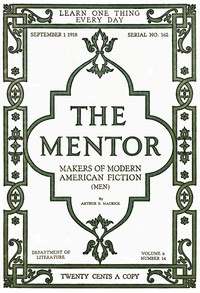
The Mentor: Makers of American Fiction, Vol. 6, Num. 14, Serial No. 162,…
Let's be clear from the start: this isn't a novel. 'The Mentor: Makers of American Fiction' is a piece of literary history packaged for the everyday reader of 1916. Published as part of a popular educational series, it aims to make the giants of early American literature feel accessible and human.
The Story (Of The Storytellers)
Arthur Bartlett Maurice acts as your tour guide through the first century of American fiction. He starts with the early pioneers like Charles Brockden Brown, who wrote eerie Gothic tales, and moves through the famous figures of the 'American Renaissance.' He gives you the highlights of their work, sure, but the real focus is on the person behind the pen. You learn about Washington Irving's years living in Europe and how it shaped 'The Sketch Book.' You get the scoop on James Fenimore Cooper's contentious personality and his love for the frontier. The book paints a picture of a national literature finding its voice, from simple colonial tales to the complex psychological depths of Hawthorne and Melville.
Why You Should Read It
I loved this because it removes the authors from their marble pedestals. Reading it, you realize these 'Makers of American Fiction' were not just names on a syllabus. They were people with financial troubles, strong opinions, and unique quirks. Maurice writes with genuine enthusiasm, and his early 20th-century perspective is a bonus. You're not just learning about Hawthorne; you're seeing how Hawthorne was viewed by a reader just 50 years after his death. It connects the dots between the world that created 'The Scarlet Letter' and the modern world that was about to experience World War I. It makes literary history feel less like a timeline and more like a series of vivid, interconnected stories.
Final Verdict
This is a perfect, quick read for curious book lovers. It's ideal if you enjoyed classics like 'The Last of the Mohicans' or 'Rip Van Winkle' and want to know more about the minds that created them. It's also great for history fans who want to see how a nation's identity gets shaped through its stories. Because it's over a century old, the language is charmingly formal in places, but it's never dry. Think of it as a friendly, informative chat with a well-read guide from the past. You'll come away with a new appreciation for the messy, brilliant beginnings of American fiction.
Karen Robinson
11 months agoSurprisingly enough, the depth of research presented here is truly commendable. A valuable addition to my collection.



William Brown
1 year agoHonestly, the flow of the text seems very fluid. One of the best books I've read this year.