eBooks
94 Books foundAbout the LIGOB Public Domain Literature Library
The LIGOB Public Domain Literature Library offers a curated collection of 94 historical texts, each accompanied by editorial notes that help readers understand context, structure, and significance. These works—ranging from military memoirs to social sketches—are drawn from public-domain sources and presented with careful attention to their original form.
Browsing the Catalogue
You can explore the library through the main archive page, which lists all titles. For a more focused approach, four categories group works by theme: Revolutions; Modern Nations; Social History; and World Events. Each category includes a guide explaining why the works belong together and offering three recommended readings to start with.
Book Records and Attribution
Every book record includes the full title, author, publisher, and a set of keywords drawn from standard library catalogs. The target reader field indicates the intended audience, and the catalogue note—prepared as supplementary catalogue material—provides a critical summary of the work's content and approach. All texts are sourced from Project Gutenberg, and URLs lead directly to the full editions.
Source Attribution
Each work in this library originates from Project Gutenberg, a trusted repository of public-domain texts. The LIGOB edition does not alter the original content but adds editorial commentary to aid understanding. Authorship and publication facts are preserved as given in the source.
Categories Explained
The four categories—Nations, Peoples & the Past; Wars, Revolutions & Nations; Social History; and Journeys into the Unknown—are designed as navigation aids, not rigid classifications. Some works could fit multiple categories; the assigned category emphasizes one dimension of the text's subject matter. Each category page includes a limitation note to clarify what is not covered.
Three Reading Paths
1. Revolutions and Empire: Begin with the Taiping Rebellion accounts by Augustus Lindley (Volumes I and II), then move to George Dodd's history of the Indian Revolt. These works show how contemporary participants and observers framed large-scale conflicts.
2. War and Memory: Start with John Hargrave's At Suvla Bay for a personal view of the Dardanelles, then read John Masefield's Gallipoli for a poet's perspective. Finish with the editorial notes on the Peace Conference for a diplomatic angle.
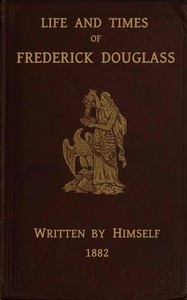
3. Social Observation: Read J.D. Green's slave narrative alongside Frederick Douglass's third autobiography to compare firsthand accounts of bondage and freedom. Add Nancy Bostick De Saussure's plantation memoir for a contrasting Southern perspective.
Bibliographic dates and catalogue measurements
The catalogue distinguishes the Project Gutenberg digital release from a work’s original or first publication. Project Gutenberg is identified as the digital source for the edition available here; its release year is therefore shown as Gutenberg Release Year, not as the work’s original publication year.
When an explicit first-publication or issue date can be supported directly by the title or issue information, it may be shown separately as First Publication Year. When that date cannot be confirmed, the catalogue displays Not confirmed rather than guessing a year.
Where the source text can be measured reliably, the catalogue may provide word count and estimated reading time. These measurements describe reading scope and are not quality rankings.
The current catalogue contains 4 active subject categories: Revolutions, Modern Nations, Social History, and World Events. Categories are browsing aids and may overlap where a work reasonably fits more than one subject.