
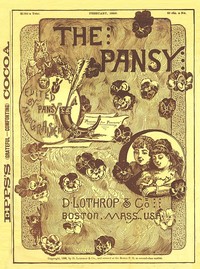
The Pansy Magazine, February 1886 by Various
Forget everything you know about modern magazines. 'The Pansy Magazine' from February 1886 is a direct portal to another time. Edited by the prolific author 'Pansy' (a pen name for Isabella Alden), this monthly publication was aimed at Christian youth. This particular issue is a collection of various works, so there's no single narrative thread. Instead, you get a sampler of Victorian-era entertainment and instruction.
The Story
You open the pages and find a mix of content. There are short, moral-driven tales about children learning lessons in honesty, kindness, and obedience. A poem might celebrate a simple virtue. You'll find serialized stories continuing from previous issues, often following young protagonists through small domestic trials. Sprinkled in are puzzles, simple games, and even a bit of natural history. The overall 'story' is the portrait it paints: a world where character-building was considered the most important part of a young person's reading material. The conflicts are small-scale—a broken promise, a temptation to be lazy, a struggle to tell the truth—but they were the building blocks of morality for its original readers.
Why You Should Read It
Reading this isn't about getting swept up in a thrilling plot. It's about the experience. The language is formal yet simple, and the values are unmistakably of its time. You can feel the editorial hand guiding young minds. I found myself smiling at the earnestness, sometimes chuckling at the dated advice, and often pausing to think about how much our media for young people has changed. It’s not 'exciting,' but it is genuinely absorbing in a quiet, historical way. You get a real sense of the cultural air that children breathed in the late 19th century.
Final Verdict
This is a niche but wonderful read for the curious. It's perfect for history buffs, writers researching the period, or anyone fascinated by social history. If you love finding old things and wondering about the people who used them, you'll enjoy this. It's not a page-turner in the traditional sense, but as a primary source, it's a captivating glimpse into the past. Just don't expect modern pacing or sensibilities—let the magazine be what it is, and you'll find a unique charm.



Mark Johnson
1 year agoA must-have for anyone studying this subject.