
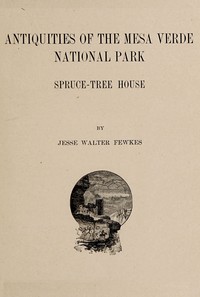
Antiquities of the Mesa Verde National Park : Spruce-tree House by Fewkes
Let's be clear from the start: this is not a page-turning thriller. Published in 1909, Antiquities of the Mesa Verde National Park: Spruce-Tree House is a formal government report. But don't let that scare you off. In its own way, it tells one of the most fascinating stories on the continent.
The Story
The 'plot' is the process of discovery. Archaeologist Jesse Walter Fewkes was tasked by the Smithsonian with documenting Spruce-Tree House, one of Mesa Verde's best-preserved cliff dwellings, to protect it from looters. The book is his meticulous record. He walks you through the site room by room, like a real estate tour for a ghost town. He describes the architecture—how the buildings were tucked under the cliff roof. He catalogs what was found: beautifully painted pottery, stone axes, woven sandals, and even corn cobs. He speculates on what each room was used for—living spaces, storage, ceremonial kivas. The central, unspoken question hangs over every page: Who were these people, and what happened to them?
Why You Should Read It
You read this for the atmosphere and the tangible connection to the past. Fewkes writes with a scientist's care, but you can feel his wonder. When he describes finding a sealed storage room, its corn and beans still inside, it’s chilling. This book freezes a moment in time just as archaeology was becoming a science. It's raw data, but it’s data about human lives. You get a real sense of the Ancestral Puebloans' skill and the sheer scale of their community. It also makes you think about preservation. Fewkes was there because this place was almost lost. His work helped save it.
Final Verdict
This is a niche read, but a powerful one. It's perfect for history buffs, archaeology nerds, or anyone planning a trip to Mesa Verde. Reading it before you visit will transform your experience. You'll look at those silent stone walls and hear the echoes Fewkes captured on paper. It's also great for writers or creators looking for deep, authentic inspiration about ancient America. If you need a fast-paced narrative, look elsewhere. But if you want to stand beside an explorer in 1909 and feel the dust of centuries settle around you, this report is your time machine.
Steven King
7 months agoEnjoyed every page.
Jackson Williams
1 year agoI came across this while browsing and the arguments are well-supported by credible references. I couldn't put it down.
Charles Young
10 months agoClear and concise.







Ava Sanchez
11 months agoJust what I was looking for.