
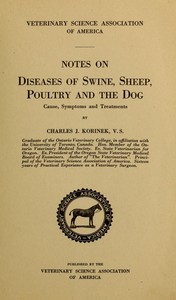
Notes on Diseases of Swine, Sheep, Poultry and the Dog by Charles James Korinek
Let's be clear from the start: this is not a novel. Notes on Diseases of Swine, Sheep, Poultry and the Dog is exactly what the title promises—a practical guide written in 1910 by veterinarian Charles James Korinek. There's no traditional story arc. Instead, the 'plot' is the relentless, season-by-season battle against animal illness on a farm.
The Story
The book is organized by animal. For pigs, sheep, poultry, and dogs, Korinek lists common diseases one by one. He describes what the sickness looks like (the symptoms), what he thinks causes it, and then lays out the treatments. These cures are a blend of emerging science and old-school remedies—everything from antiseptic washes and specific drugs of the era to dietary changes and isolation techniques. You follow his logical, methodical approach to problem-solving, from identifying a case of swine erysipelas to figuring out why a dog is losing its hair. The drama is quiet but constant: will this advice be enough to save the animal?
Why You Should Read It
I found this book completely absorbing for its sheer honesty and grit. Korinek writes with a calm, direct authority. There's no fluff, just a deep sense of responsibility. Reading it, you get a powerful sense of the economic and emotional weight that rested on the health of these animals. A sick sheep wasn't just a pet; it was wool, meat, and security. What struck me most was the palpable tension between knowledge and limitation. Korinek knows about germs and sanitation, but his toolbox is so small compared to today's. You can feel him working hard to give the best advice possible with what he's got.
Final Verdict
This is a niche book, but a rewarding one. It's perfect for history buffs, especially those interested in agriculture, medicine, or everyday life in the early 1900s. It's also great for modern homesteaders or farmers who get a kick out of historical perspective. If you love primary sources that show how people actually *worked* and solved problems, you'll find this fascinating. But if you're looking for a narrative or casual bedtime reading, this probably isn't it. Approach it like a museum visit for your bookshelf—a chance to examine a slice of forgotten, vital knowledge.
Christopher Martinez
1 year agoLoved it.
George Williams
4 months agoEnjoyed every page.
Noah Anderson
4 months agoAs someone who reads a lot, the flow of the text seems very fluid. I will read more from this author.
Nancy Sanchez
1 year agoGreat digital experience compared to other versions.









Paul Walker
10 months agoFast paced, good book.