
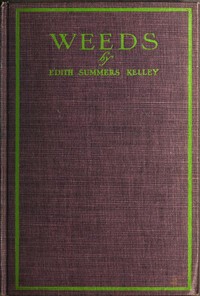
Weeds by Edith Summers Kelley
Let's talk about a book that deserves way more attention than it gets. Edith Summers Kelley's Weeds, published in 1923 and then nearly lost to time, is a stunningly honest portrait of a woman's life on the land. It doesn't have fancy twists or epic battles. Instead, it gives us something rarer: the truth of daily struggle.
The Story
We meet Judith Pippinger as a young girl in rural Kentucky. She's sharp, observant, and full of a restless energy that the small community doesn't quite know what to do with. She falls for a farmer, Jerry Blackford, and they start a life together on a tobacco farm. This is where the dream meets reality. The story follows Judith through years of backbreaking labor, constant pregnancy, and poverty that grinds away at her spirit. The 'weeds' of the title aren't just the plants choking the crops; they're the hardships and limitations that slowly overrun her own life. The plot is the slow, inevitable arc of her existence—the fight to keep her sense of self alive in a world that only values her work and her womb.
Why You Should Read It
I was completely gripped by Judith. Kelley doesn't make her a saint or a villain. She's a complex, sometimes difficult woman, and that's what makes her so real. You feel the weight of every chore, the isolation of being smarter than your surroundings, and the quiet tragedy of a mind with no outlet. The writing about the natural world is beautiful, but it's a harsh beauty that mirrors Judith's life. This book pulls no punches about the physical and emotional toll of farm life, especially for women. It made me think about all the stories like Judith's that history books leave out—the ones about endurance without glory.
Final Verdict
This book is perfect for readers who love character-driven stories and American historical fiction that feels authentic, not romanticized. If you appreciated the social realism of authors like Theodore Dreiser or the rural focus of Willa Cather, but wanted a grittier, female-centered view, you'll find a kindred spirit in Weeds. It's a slow burn, not a page-turner, but its power lingers. Fair warning: it's not a cheerful read, but it's a profoundly moving and important one. Think of it as essential reading for understanding the quiet side of the American experience.
Mason King
1 year agoGreat read!




Ashley Brown
1 year agoTo be perfectly clear, it provides a comprehensive overview perfect for everyone. One of the best books I've read this year.