About 751 minutes
The ships and sailors of old Salem — Text and Context
Social History
172,675 recorded words. 114 minutes difference from this book's estimate.
View Gutenberg source #73759
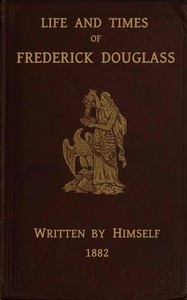
Life and times of Frederick Douglass — Inside the Classic can be approached with a clearer sense of reading commitment from its source measurements: 198,763 words, 14 hr 25 min estimated reading time, and 51 detected text sections.
The text analysis averages about 24.6 words per sentence, while the detected sections provide another way to judge how the source is divided.
Project Gutenberg metadata also associates the work with “Douglass, Frederick, 1818-1895,” connecting these edition facts with the source record’s subject description.
Explore this collection
These alternatives are selected using recorded categories and estimated reading time.
About 751 minutes
Social History
172,675 recorded words. 114 minutes difference from this book's estimate.
View Gutenberg source #73759About 679 minutes
Social History
156,046 recorded words. 186 minutes difference from this book's estimate.
View Gutenberg source #67626About 488 minutes
Social History
112,211 recorded words. 377 minutes difference from this book's estimate.
View Gutenberg source #6756Search stored excerpts and compare books → Choose by your preferences →
Choices use stored catalog measurements. Estimates vary with reading speed. A shared category is a catalog label, not a claim that two books have the same argument or literary quality.
Search reads excerpt text stored with this catalog and links to its associated Gutenberg record. The connection is stored in the site database; this tool does not recheck that every excerpt is word-for-word identical to that external record. Excerpt search does not cover every chapter and does not verify historical publication dates.
Catalog snapshot checked: 2026-09-25. Coverage: 94 public books, 94 available source excerpts.
Calculated from edition completeness, EPUB availability, text structure and catalogue metadata. Not a user rating.
Total of 100 points, scaled to a 2.5-5.0 range. Editions with an empty description or a missing EPUB file are not scored.
Public-domain source text
The source text is kept in the dedicated reader, separate from this catalogue record and its commentary.
Frederick Douglass’s Life and Times (1881, expanded 1882) is his third and most comprehensive autobiography, covering not only his enslavement and escape but also his subsequent career as an editor, orator, and government official. The book’s structure alternates between tightly focused childhood episodes—such as the separation from his grandmother and his mother’s night journey to comfort him—and wide-angle views of national events like the Free Soil Convention, the Dred Scott decision, and the John Brown raid. This movement between intimate and public registers gives the narrative a distinctive rhythm, as personal loss repeatedly echoes political upheaval.
Throughout the excerpts, fire appears as both a literal and symbolic force. Douglass describes his Rochester house burning to the ground, consuming twelve volumes of his newspaper—a loss he calls “immeasurable.” The fire destroys the material record of his work between 1848 and 1860, a period he deems “more pregnant with great events” than any other outside the Civil War. This incident echoes earlier losses: the separation from his grandmother, the death of his mother, and the systematic erasure of family ties under slavery. Fire becomes a figure for the fragility of documentation and memory, a theme reinforced by his reliance on a single friend’s preserved volume of the North Star to fill the gap.
In a passage that shifts from editorial work to clandestine action, Douglass describes his role as “station master and conductor of the underground railroad” in Rochester. He emphasizes the secrecy and danger involved, noting the legal penalties for assisting fugitives. Yet he calls this work “congenial, attractive, fascinating, and satisfactory,” contrasting it with the public, documented efforts of his newspaper. The image of eleven fugitives under his roof at once grounds the narrative in a specific, domestic scene and underscores the scale of the operation. This section reveals a different kind of movement—not the chronological sweep of political history, but the quiet, repeated passage of people across the border to Canada.
Douglass directly addresses a recurring challenge to his authority: the belief that his editorials and speeches were written by white persons. He notes that “the low estimate of Negro possibilities” fueled this skepticism, and he suspects it “still lingers in the minds of some of my democratic fellow-citizens.” This moment is striking for its self-awareness and its placement within a narrative that otherwise focuses on external events. By naming the doubt and linking it to racial prejudice, Douglass turns the reader’s attention to the act of writing itself—and to the stakes of his own authorship. The passage also foreshadows the loss of his newspaper files, as if the physical record of his words was always vulnerable to erasure.
Douglass’s narrative is built around gaps—both personal and historical. He acknowledges that he must “cover this chasm, as best I can from memory” after the fire destroyed his papers. This admission is not merely a lament but a structural principle: the book proceeds by assembling fragments, relying on memory and borrowed documents. The table of contents itself reflects this episodic approach, with chapters titled “Troubles of Childhood” and “Removal from Grandmother’s” that promise discrete, vivid scenes rather than continuous chronology. The result is a work that feels both sweeping and deliberately incomplete, a record of what survives rather than a seamless account.
Readers approaching Life and Times should attend to the way Douglass weaves together personal testimony and public history, and to the recurring motifs of loss, documentation, and movement. The book rewards attention to its silences and gaps as much as to its set pieces. It is not a straightforward chronicle but a layered reflection on what it means to tell a life story when the records have been burned and the stakes remain urgent.
Reading about Douglass copying down the names of fugitives he’d helped made me think of my grandmother’s old diary, where she’d quietly listed relatives who never left Russia. That same ache of documentation rose in me while reading Within the Pale: The True Story of Anti-Semitic Persecution in Russia — Story, Setting & Ideas. Both books hold loss like a held breath, trusting the list itself to remember what the world ignored.
Your answers remain private and are stored only in this browser.