
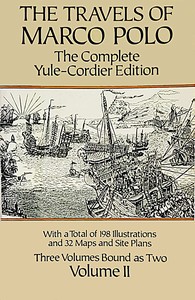
The Travels of Marco Polo — Volume 2 by Marco Polo and da Pisa Rusticiano
The Story
Volume 2 picks up with Marco Polo still hanging out in the court of Kublai Khan, the Mongol emperor who basically ruled half the world in the 1200s. Polo wasn’t just a tourist—he actually worked for the guy. So the book covers his journeys as a diplomat and spy across India, Japan, parts of Southeast Asia, and even Africa. You get detailed descriptions of strange animals like elephants and rhinos (which most Europeans had no clue about), along with cities full of silk and pearls. But the coolest part? Polo’s stories show how the Mongol Empire connected different cultures—like a huge, brutal, and slightly broken internet made of horses.
Why You Should Read It
I love this book because it’s a time machine in text form. You really feel how huge and weird the world must have seemed to someone like Polo. The language is old-school—this was written in Old French after he told his cellmate Rusticiano the whole story—but there’s something about the straightforward way he writes. No fuss, just "Here’s a city that drinks from a river full of diamonds, but also there’s a war going on." Plus, you get to decide: is Polo telling true stories, or did he just catch a bad case of exaggeration fever? Some modern historians are on his side, but others still question if he actually made it to China. It’s like its own mystery box show.
Final Verdict
If you love adventure, history, or just hearing a buddy tell a truly epic travel story, this book’s for you. It’s not a straight-up novel—there’s no tight plot, just… stuff he saw. But if you go in expecting a medieval version of “Seen through Wonder,” you’ll probably dig it. Perfect for history buffs who like gossipy details, armchair travelers, or anyone who likes a tale that says “trust me, or don’t.” This one’s gone from classic to controversial—and back again—and it never gets old.
This historical work is free of copyright protections. Thank you for supporting open literature.

Margaret Miller
1 year agoI decided to give this a try based on a colleague's recommendation, the logic behind each conclusion is easy to follow and verify. I am looking forward to the author's next publication.