About 311 minutes
A Concise Chronicle of Events of the Great War — Text and Context
World Events
71,473 recorded words. 35 minutes difference from this book's estimate.
View Gutenberg source #48525
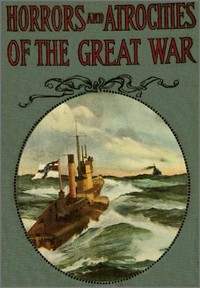
Horrors and Atrocities of the Great War Including the Tragic Destruction of the Lusitania — Edition Insights can be approached with a clearer sense of reading commitment from its source measurements: 79,437 words, 5 hr 46 min estimated reading time, and 11 detected text sections.
The text analysis averages about 21.5 words per sentence, while the detected sections provide another way to judge how the source is divided.
Project Gutenberg metadata also associates the work with “World War, 1914-1918 -- Atrocities,” connecting these edition facts with the source record’s subject description.
Explore this collection
These alternatives are selected using recorded categories and estimated reading time.
About 311 minutes
World Events
71,473 recorded words. 35 minutes difference from this book's estimate.
View Gutenberg source #48525About 291 minutes
World Events
66,892 recorded words. 55 minutes difference from this book's estimate.
View Gutenberg source #57424About 435 minutes
World Events
99,929 recorded words. 89 minutes difference from this book's estimate.
View Gutenberg source #35355Search stored excerpts and compare books → Choose by your preferences →
Choices use stored catalog measurements. Estimates vary with reading speed. A shared category is a catalog label, not a claim that two books have the same argument or literary quality.
Search reads excerpt text stored with this catalog and links to its associated Gutenberg record. The connection is stored in the site database; this tool does not recheck that every excerpt is word-for-word identical to that external record. Excerpt search does not cover every chapter and does not verify historical publication dates.
Catalog snapshot checked: 2026-09-25. Coverage: 94 public books, 94 available source excerpts.
Calculated from edition completeness, EPUB availability, text structure and catalogue metadata. Not a user rating.
Total of 100 points, scaled to a 2.5-5.0 range. Editions with an empty description or a missing EPUB file are not scored.
Public-domain source text
The source text is kept in the dedicated reader, separate from this catalogue record and its commentary.
Logan Marshall's Horrors and Atrocities of the Great War (1915) opens with a biblical epigraph—'Inasmuch as ye have done it unto one of the least of these my brethren'—that frames the ensuing catalogue of wartime violence as a moral indictment. The work compiles reports, eyewitness testimony, and essays from contributors including Sir Gilbert Parker and Philip Gibbs, assembling evidence of systematic destruction and civilian suffering. The excerpts reveal a deliberate structure: each section presents a specific atrocity, from the sacking of Louvain to the sinking of the Lusitania, supported by named witnesses and official documents. Marshall's editorial voice alternates between impassioned condemnation and documentary restraint, creating a tension between outrage and evidentiary rigor.
The account of Louvain's destruction relies heavily on the testimony of Professor E. Gilson, whose letter to the Belgian Minister of Justice provides a structured, almost archaeological description of the city's state. Gilson compares the ruined center to 'a veritable Pompeii,' but immediately distinguishes it: 'how much more tragic and vivid is the sight of this new Pompeii!' The comparison underscores the immediacy of the destruction—the bodies still unburied, the fires still smoldering. Gilson's narrative moves from the panoramic ('a smoking heap of ruins') to the particular: a key picked up from a charred corpse, an old woman weeping over a makeshift grave. Marshall embeds this personal testimony within a broader framework of indignation, quoting The London Tablet's condemnation of 'Modern Huns.' The effect is to make the reader a secondary witness, guided by both the professor's precise observations and the editor's moral framing.
Several passages in the excerpts detail the methods of destruction, revealing a pattern of calculated brutality. A villager describes soldiers breaking windows, pouring petroleum, and throwing burning straw, while others shoot at upper-story windows to prevent resistance. This procedural language—'two ways of setting fire to the houses'—transforms atrocity into a grim technology. Marshall juxtaposes such technical descriptions with scenes of arbitrary cruelty: civilians shot for appealing to 'their tormentors’ better feelings,' women and children driven out 'with uplifted arms and under the menace of bayonets.' The repetition of the word 'systematic' (e.g., 'Burning of City Systematic') suggests that the editor sees these acts not as spontaneous violence but as organized policy. The excerpts do not, however, provide evidence of high-level orders; the focus remains on ground-level execution and its human cost.
The subtitle promises coverage of 'the Tragic Destruction of the Lusitania,' and the excerpts include a striking caption: 'Merciless Monster of the Deep. The murderous German submarine sighting its prey.' This personification of the submarine as a 'monster' reflects the work's rhetorical strategy of demonizing both the weapon and its users. The phrase 'new kind of warfare' recurs throughout the text, encompassing aerial bombing, submarine attacks, and the deliberate targeting of civilians. Marshall's introduction frames the conflict as a regression: 'the progress of the world is halted, its material and physical progress turned to retrogression.' The Lusitania section, though not fully excerpted, is positioned as the culmination of this regression—a single event that crystallizes the horrors described in earlier chapters. The editorial note does not provide casualty figures or survivor accounts from the excerpts, but the framing suggests the sinking is presented as the ultimate proof of a war without limits.
Readers approaching Horrors and Atrocities of the Great War should attend to the interplay between documentary evidence and editorial commentary. Marshall frequently allows witnesses to speak at length—Gilson's letter, the villager's account—but frames their words with biblical epigraphs and indignant headlines. This dual voice invites scrutiny: how does the selection of testimony shape the reader's understanding? The work is best read as a primary source on wartime propaganda and moral rhetoric, as much as a record of events. Comparing the treatment of different incidents may reveal the criteria by which certain atrocities were deemed representative or especially shocking.
For years I’ve held Marshall’s Horrors and Atrocities, its pages heavy with the wreck of Louvain and the sea’s swallowing of the Lusitania. It whispers of a world losing its bearings. Alongside it, I keep that quieter companion, German Atrocities from German Evidence — Inside the Classic, where the same tragedy speaks in another tongue—not accusation, but a sorrowful echo, each book a dim lantern for the other.
Your answers remain private and are stored only in this browser.