About 102 minutes
The Myth of a Guilty Nation — Inside the Classic
World Events
23,410 recorded words. 2 minutes difference from this book's estimate.
View Gutenberg source #44508
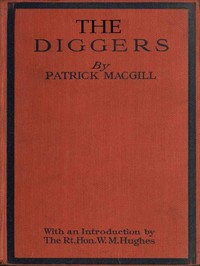
The Diggers: The Australians in France — Themes and Context can be approached with a clearer sense of reading commitment from its source measurements: 22,843 words, 1 hr 40 min estimated reading time, and 10 detected text sections.
The text analysis averages about 22.1 words per sentence, while the detected sections provide another way to judge how the source is divided.
Project Gutenberg metadata also associates the work with “World War, 1914-1918 -- Australia,” connecting these edition facts with the source record’s subject description.
Explore this collection
These alternatives are selected using recorded categories and estimated reading time.
About 102 minutes
World Events
23,410 recorded words. 2 minutes difference from this book's estimate.
View Gutenberg source #44508About 103 minutes
World Events
23,512 recorded words. 3 minutes difference from this book's estimate.
View Gutenberg source #49208About 77 minutes
World Events
17,505 recorded words. 23 minutes difference from this book's estimate.
View Gutenberg source #23163Search stored excerpts and compare books → Choose by your preferences →
Choices use stored catalog measurements. Estimates vary with reading speed. A shared category is a catalog label, not a claim that two books have the same argument or literary quality.
Search reads excerpt text stored with this catalog and links to its associated Gutenberg record. The connection is stored in the site database; this tool does not recheck that every excerpt is word-for-word identical to that external record. Excerpt search does not cover every chapter and does not verify historical publication dates.
Catalog snapshot checked: 2026-09-25. Coverage: 94 public books, 94 available source excerpts.
Calculated from edition completeness, EPUB availability, text structure and catalogue metadata. Not a user rating.
Total of 100 points, scaled to a 2.5-5.0 range. Editions with an empty description or a missing EPUB file are not scored.
Public-domain source text
The source text is kept in the dedicated reader, separate from this catalogue record and its commentary.
Patrick MacGill’s The Diggers: The Australians in France opens not with a panoramic battle scene but with a sustained, almost clinical account of booby traps. The text dwells on the mechanics of hidden explosives—acid eating through wire, a gold watch hung by copper wire, a dead German wired to a stretcher. This focus on lethal ingenuity shapes the book’s distinctive voice: a blend of matter-of-fact reportage and dark comedy. MacGill’s officer-narrator speaks with the air of a man pronouncing a known truth, while the civilian listener supplies the expected outrage. The effect is to make the reader complicit in the soldiers’ wary, knowing humor.
MacGill filters much of the action through an unnamed officer whose speech is marked by understatement and a relish for anecdote. When describing a colonel who spots a gold watch hanging by a copper wire, the officer notes that the man ‘wanted a watch’ but that ‘the wire roused his suspicions.’ The gap between desire and danger is bridged by a laconic, almost technical caution. The officer’s ribbons and service stripes are mentioned, but his authority comes from his tone: he presents booby traps as a known truth, not a shocking revelation. This voice allows MacGill to convey the soldiers’ acclimatization to horror without melodrama.
Throughout the excerpt, a civilian interjects with exclamations like ‘The beasts!’—a reaction that the officer gently corrects: ‘It’s the nature of the animal.’ This exchange does more than condemn German tactics; it establishes a hierarchy of experience. The civilian’s outrage is sincere but naive, while the officer’s calm explanation reveals a world where a ticking clock or a carelessly thrown spade may be lethal. MacGill uses this contrast to show how the soldiers’ perception has been reshaped by the war. The civilian remains an outsider, unable to grasp the constant vigilance required.
MacGill organizes the narrative around a series of trap anecdotes, each introduced with phrases like ‘Again, a party of Americans’ or ‘Once he saw a stretcher.’ This repetitive structure mirrors the soldiers’ own pattern of suspicion: every object must be examined, every story retold as a warning. The traps are described with precise, almost instructional detail—the acid eating a wire, the rope tied to a stretcher handle. Yet the text also includes moments of anticlimax, as when the pulled stretcher yields nothing. These false alarms inject a grim humor and remind the reader that the threat is as much psychological as physical.
MacGill’s vocabulary for clearing captured ground is notably bureaucratic: ‘mopping up’ is defined as ‘clearing up the litter left on the field.’ The word ‘litter’ reduces deadly devices to debris, a euphemism that the soldiers themselves might use. The officer speaks of ‘suspicious objects’ and ‘trip wires’ with the same tone he might use for routine chores. This linguistic flattening is a coping mechanism, but it also shapes the reader’s experience: the horror is always present but never overstated. MacGill’s prose, like his characters, refuses to dwell on emotion, letting the facts speak for themselves.
Readers approaching The Diggers should attend to the way MacGill builds his account from small, concrete details rather than grand statements. The book’s power lies in its restraint: the officer’s calm voice, the civilian’s shock, the repeated pattern of suspicion and release. These choices reveal a writer more interested in the texture of soldierly perception than in heroic narrative. The result is a work that feels less like a history than a series of field notes, each one a lesson in how to see a world where nothing can be trusted.
I keep thinking about how the diggers in that book laughed to steady themselves, every joke shadowed by something they couldn’t see. It reminded me of another voice from that era, an American girl’s quiet account of wartime Germany, where the ordinary and the ominous sit side by side. Her words linger, like a half-remembered conversation. Germany in War Time: What an American Girl Saw and Heard — Inside the Classic carries that same hushed weight, a truth you feel more than read.
Save your reaction, strongest insight, and memorable passage.